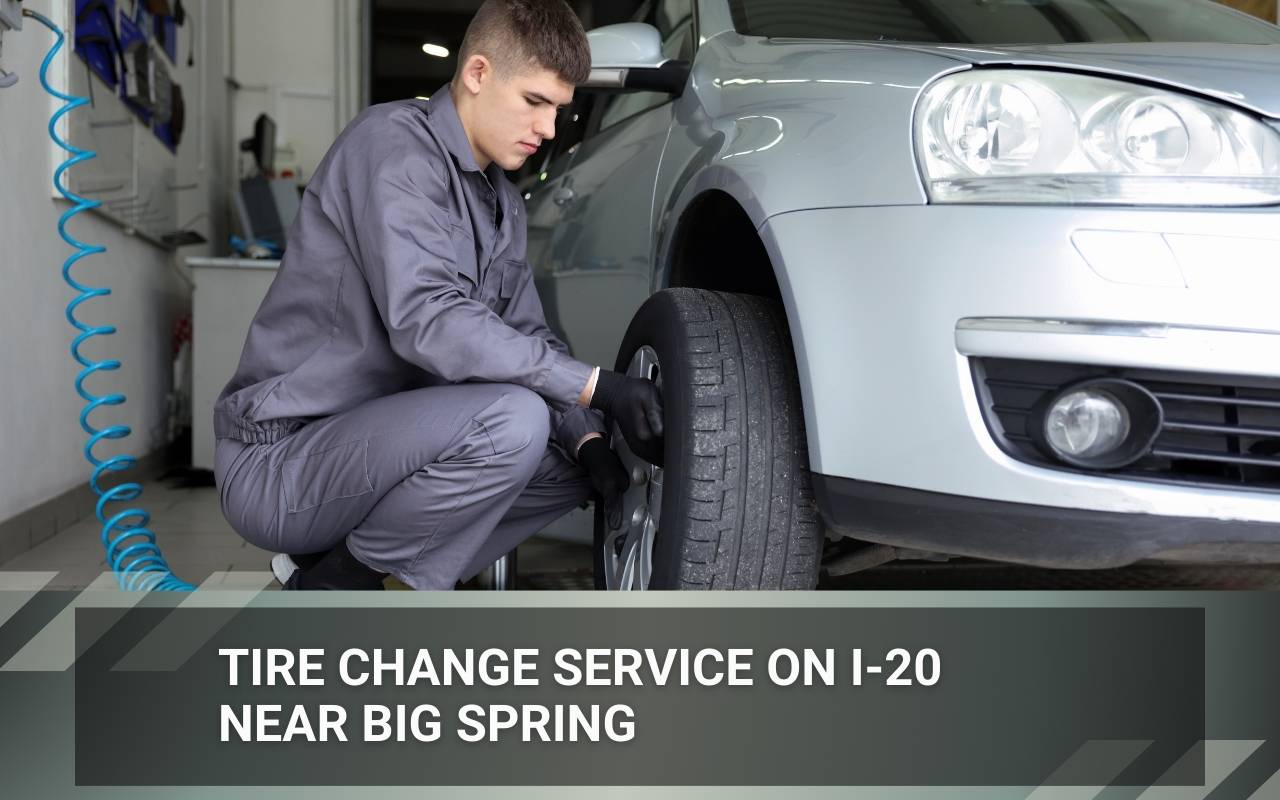
Tire Change Service on I-20 near Big Spring
Tire Change Service on I-20 near Big Spring becomes urgent when a flat tire suddenly interrupts your drive. A peaceful trip can quickly turn into a stressful moment, especially on a long stretch of highway far from a service station.
On wide, open roads, knowing how to manage a tire change is key for safety and calm. Safe jack points and the right lug nut order may seem like small details, yet they help keep your vehicle stable while you work.
A smooth tire change depends on good tools, clear steps, and knowing when professional help is needed. This guide shares simple, practical tips that turn a stressful roadside problem into a task you can handle and finish safely.
Importance of Proper Tire Maintenance
Regular tire maintenance keeps your vehicle running safely and smoothly. Well-cared-for tires improve traction, handling, and braking, which matters a lot when something unexpected happens on the road. By checking tread depth and watching for cracks or bulges, you lower the chance of a sudden blowout that could leave you stuck.
Consistent tire care also boosts fuel efficiency and helps your tires last longer. When you travel on busy routes like I-20 near Big Spring, basic tire checks reduce stress and danger. Routine inspections and balancing protect your safety and cut the odds of needing emergency Tire Change Service on I-20 near Big Spring.
Check tire pressure at least once a month.
Inspect tread wear before long highway trips.
Rotate and balance tires on the schedule in your manual.
Taking a few minutes before you start your drive can prevent long delays later. These small habits support safer travel and more confidence on remote stretches of interstate.
Essential Tools for a Tire Change
To handle a flat tire with confidence, keep a few simple tools in your trunk. Use a sturdy jack that matches your vehicle’s weight and a reliable lug wrench to loosen and tighten lug nuts. A flashlight with fresh batteries helps if you need to work in the dark, and work gloves protect your hands.
Vehicle jack and lug wrench or tire iron.
Flashlight with extra batteries.
Work gloves and a reflective vest.
Wheel chocks or blocks to keep the car from rolling.
Portable tire pressure gauge and small air compressor.
A tire pressure gauge and compact air compressor let you adjust pressure on the spot. If your spare falls below its recommended level or looks too worn, choose to call for tow assistance instead of trying a risky repair without proper tools.
Locating Safe Jack Points on Your Vehicle
Using safe jack points keeps your vehicle steady while you change a tire. Your owner’s manual usually highlights reinforced spots along the frame near each wheel. These areas are strong enough to support the vehicle’s weight without bending panels or causing damage.
Park on a flat, level surface away from traffic.
Engage the parking brake and place wheel chocks.
Check the manual for the exact jack point locations.
Look for notches, arrows, or labels under the vehicle.
Before lifting the car, take a moment to confirm you are on the correct point. Choosing the wrong location can bend metal or cause the jack to slip. Using safe jack points protects both your car and your safety on busy roads.
Understanding the Lug Nut Order
Following the correct lug nut order keeps the wheel snug and even against the hub. Most vehicles use a star or crisscross pattern, tightening opposite nuts in sequence. This pattern spreads pressure evenly and helps prevent warping or misalignment.
Start by threading each lug nut by hand to avoid cross-threading. Then, use the lug wrench to snug them in the proper lug nut order without fully tightening any one nut. Once the car is lowered, repeat the pattern to apply final tightness, so the wheel stays secure while you drive.
Steps to Safely Remove a Flat Tire
Before starting, shift the car into park, apply the parking brake, and turn off the engine. Place wheel chocks on the opposite wheel to keep the vehicle from rolling. Turn on hazard lights, wear reflective gear if you have it, and stay as far from moving traffic as possible.
Loosen the lug nuts slightly with the lug wrench before lifting the vehicle. Then, position the jack on the safe jack point and raise the car until the flat tire clears the ground. Finish removing the lug nuts and gently pull the flat tire straight toward you, keeping the nuts in a safe place so they do not roll away.
Installing the Spare Tire Correctly
To install the spare, line up the holes with the wheel studs and push it firmly toward the hub. Thread each lug nut by hand in the correct lug nut order to avoid cross-threading. Tighten them lightly in a crisscross pattern so the spare sits evenly.
Lower the vehicle slowly until the tire just touches the ground and no longer spins freely. Tighten the nuts again in the same pattern until snug. When the vehicle is fully on the ground, give each lug nut a final firm pull. Check your manual for any specific torque guidance to stay within your spare limits.
Checking Tire Pressure and Tightening Lug Nuts
Once the spare is mounted, use a tire pressure gauge to confirm it matches the PSI listed in your manual or on the driver-side door sticker. Overinflated or underinflated spares can affect handling and may wear out faster, especially at highway speeds.
After confirming pressure, revisit the lug nut order and tighten each nut in a star pattern. Properly torqued lug nuts help prevent vibration and looseness. After driving a short distance, pull over in a safe spot to recheck both tire pressure and nut tightness.
Knowing When to Seek Professional Help
Even with clear instructions, not every situation is right for a DIY repair. If you see damage to your jack points, stripped lug nuts, or a spare tire that falls outside its spare limits, it is safer to stop and call for tow assistance rather than push ahead.
If you do not feel secure handling Tire Change Service on I-20 near Big Spring, professional help is the best option. Trained tow operators have the right tools and experience to manage complex tire problems quickly. You can also review available roadside options by checking nearby towing and roadside services before your next long trip.
Tips for Preventing Flat Tires on Highways
Prevention starts before you leave your driveway. Check tire pressure and tread depth at the start of every trip. Watch for uneven wear patterns, which can signal alignment or suspension issues that increase the chances of a blowout at high speed.
Keep tires at the recommended pressure range.
Rotate and align tires as your manual suggests.
Avoid potholes, road debris, and broken pavement.
Do not overload your vehicle beyond its limits.
Stay alert and maintain a safe following distance so you have time to avoid hazards. If you spot objects on the road, slow down or carefully change lanes. Simple checks and smart driving habits lower the risk of getting stranded on I-20 near Big Spring.
Frequently Asked Questions
How do I know if my spare tire is safe to use?
Check the tread, sidewalls, and air pressure before installing the spare. If it looks cracked, worn, or has very low pressure and you cannot safely inflate it, treat it as unsafe and call for tow support instead of driving on it.
What should I do if I cannot loosen the lug nuts?
First, make sure the lug wrench is fully seated on the nut and apply slow, steady pressure. If the nuts will not move or feel stripped, do not force them. For your safety and to avoid damage, request roadside assistance from a towing professional.
Can I stay on the spare tire for a long drive?
Most compact spares are designed for short distances and lower speeds. Check the label on the spare and your owner’s manual for its limits. Plan to visit a tire shop as soon as possible to repair or replace the damaged tire before resuming normal highway driving.
Where can I safely pull over on I-20 near Big Spring?
If you notice a problem, signal early and move to the right shoulder or a nearby exit if possible. Choose a flat area with plenty of space between you and traffic. Turn on hazard lights, use reflective triangles if available, and stay away from active lanes.
When should I contact a towing company instead of fixing the tire myself?
Call a towing company when traffic is heavy, visibility is poor, you lack tools, or you simply feel unsure. In those moments, it is safer to contact a local towing team and let trained professionals handle the tire change on your behalf.
Ensuring Safe Travels with Proper Tire Change Knowledge
Good tire care and clear roadside steps help you stay calm when a flat happens. Knowing how to find safe jack points, follow the right lug nut order, and respect spare limits keeps you safer and more prepared on remote highways.
When situations feel risky, choosing professional Tire Change Service on I-20 near Big Spring is the safest move. By combining practical skills with timely expert help, you protect your vehicle and your passengers while keeping every trip along this busy route as smooth as possible.
